Natural Reward Pathways in the Brain
Neurons are cells that send messages through the brain using chemical and electrical signals. Neurons can be many different sizes and shapes, and they all have different jobs, like some control sleeping and other control the muscles in the body. The brain is divided into several different regions that are each responsible for for preforming different functions, like sight, hearing, memory, and motor skills, just to name a few. The center of our brain controls the reward pathway, which is responsible for diving our feeling of motivation, reward, and behavior. The job of the reward pathway is to reward us when we are preforming activities that are essential for our survival, these activities are eating, drinking, and sex. The reward pathway also connects to other important parts of the brain. These connections allow the reward pathway in the brain to know what is going on in other parts of the brain and what is happening outside of the brain. The reward pathway works by allowing the other parts of the brain to collect information for it. Your 5 senses gather information from your surroundings and then the signals that are collected are sent to the brain letting you know what is around you. For example when you haven't eaten anything all day and someone gives you a big yummy looking sandwich your 5 senses gather information about the sandwich and then they send signals to the brain letting it know that there is a sandwich right in front of you. When the sandwich has been eaten neurons in the reward pathway are released, these neurons are called dopamine, and dopamine gives you a little jolt of pleasure and that's your reward for eating the sandwich. The reward pathway is also responsible for making sure that the same activity is repeated.
Drugs After the Reward Pathway
Alcohol: Alcohol is drugs taken by drinking, and it includes beer, wine, liquor, vodka, whiskey, rum, and gin. Ethyl alcohol is found in most drinks and its a depressant, which is a drug that causes a temporary claming or drowsy effect. Alcohol is legal drink if you are over 21, but drinking alcohol gives someone a very high chance to get addicted to it or alcohol abuse. Alcohol causes loss of motor coordination, impaired speech, reasoning, balance, judgment, and time reaction. A large consumption of alcohol can cause vomiting, lack of control, lack of consciousness, and even possible death if the blood alcohol is to high.
Anabolic Steroids: Anabolic steroids are taken by the mouth or they are injected. Anabolic steroids include steroids, roids, Aronld's, gum candy, juice, pumpers, and stackers. Anabolic steroids are synthetic substances that similar to male sex hormones. They are sometimes prescribed to patients to treat medical problems that cause hormone levels to lower, it is also used when people have injuries like taring their ACL (a ligament in the knee) to reduce swelling or pain, or to promote muscle growth before or after a surgery is done. Steroids are used to produce muscles, so athletes are usually the ones that abuse this drug. Anabolic steroids have a down side, actually a couple, they can give the person that took them a higher chance of a heart attack, strokes, and other life problems, it can also cause unwanted changes to appearance like hair loss and acne.
Cocaine: Cocaine is taken by snorting it through the nose and nasal airways, and it is also known as coke, C, snow, flake, blow, and crack. Cocaine is harvested from the coca plant, and it is a stimulant which causes increased activity in the brain and in the nervous system. Cocaine causes extreme increases of energy, decreased appetite, and mental alertness in the user. Cocaine is very dangerous even when the user stops taking it, while the user is taking it they are at a high risk of having heart attacks, strokes, respiratory system failure, seizures, and disturbances in heart rhythm.
Dissociative Drugs: These drugs are taken by smoking, by the mouth, or snorting it, dissociative drugs include ketamine (special K, vitamin K, K), PCP (phencyclidine, angel dust, wack, wet, embalming fluid), and dextromethorphan (DXM, robo). PCP is ofter applied in either liquid or powder form to marijuana and tobacco cigarettes, and then smokes. Users feel out of control and disconnected from reality, they ofter display violent and unpredictable behavior. High doses can result in convulsions, comas, high fevers, or even death. Ketamine is similar to PCP, but it is less potent. While on the drug some users have claimed that they have had a terrifying feeling, much like a near-death experience. Much of the ketamine sold on the streets has been stole from vet offices where it has been used as an anesthetic. Dextromethorphan is a cough suppressant and it is found in some nonprescription cold and cough medications. Taken at the recommended does, it is safe, but taking a higher dose can produce the safe effects that PCP and ketamine have.
GHB and Rohypnol: GHG and Rohypnol are both taken by the mouth and GHG includes G, liquid ecstasty, Georgia home boy, soap, vita-G, Rohypnol includes roofies, rophine, roche, and forget me. GHB is a depressand that is abused both by party-goers for its relaxing effects and by bodybuilders for its ability to promote muscle growth. At high doses of when combined with other drugs GHB can lead to seizures, loss of consciousness, coma, or death. Rohypnol is a benzodiazepine, a class of drug that is prescribed to treat anxiety disorders. However, rohypnol is not approved for prescription use in the U.S and only sold illegally in this country. Both of these drugs are colorless, tasteless, and odorless, so they can easily be slipped into someones drink. These two drugs are often known as the "date-rape" drug because the users are physically unable to resist assault and they might not have a recollection of what happened to them earlier.
Heroin: Heroin is known as smack, H, skag, junk, and black tar, it is taken by injecting, snorting or smoking. Heroin is the most widely abused opiate, which is a class of drug which comes from the poppy plant. Although some opiates are prescribed to treat pain, heroin has no medical use. Heroin causes a "rush" of pleasure in the user that is usually followed by several hours of drowsiness. It may also cause nausea, vomiting, and severe itching. Heroin is very addictive, and withdrawal from heroin causes restlessness, muscle and bone pain, insomnia, diarrhea, vomiting, and cold flashes.
After entering the body, drugs can causes severe changes to the synapses in the brain. Drugs of abuse affect the brain in such a dramatic way that the brain must try to adapt. One way the brain compensates is to reduce the number of dopamine receptors at the synapse. As a result, after the user has "come down", they will need more of the drug next time they want to get high. This response is commonly referred to as "tolerance." The faster the drug gets to the brain the more addictive the drug is. Drugs can also kill a person, if very high doses are taken it can cause brain damage, heart attacks, and over heating. Withdrawal from the drug can be even worse, trying to stop taking the drug can cause heart attacks, brain damage, and over heating as well as cold flashes, vomiting, and insomnia.


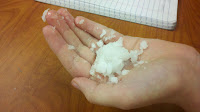 variable, like heating the polymer. My hypothesis for this lab was when the sodium silicate and the ethanol alcohol get mixed together they will become a gel-like solid because the alcohol will make the sodium silicone a solid therefore a polymer. My hypothesis was partially right mixing the sodium silicate and the ethyl alcohol did make a solid, but it wasn't a jell like substance, it was more solid.
  Comparing to the lab we did earlier in the week the polymer that resulted from this lab was clearer, smaller, and it was very lumpy, but when we made it into a sphere like object it turned out to be smooth. The Polymer lab that was done earlier in the week had a different outcome, the resulting polymer was white, silly-putty like, and very flexible unlike the Sodium Silicate Polymer Lab. Another difference is that the polymer between the Sodium Silicate Polymer Lab and the Polymer Lab was that the resulting polymer from the Sodium Silicate Polymer Lab bounced up higher in the rebound test.